Cart is empty
more_horiz

-
 See all ...View our full range of attractions, activities and destinations ...
-
- Michelangelo's David
- Uffizi Gallery
- Florence Cathedral
- Palazzo Vecchio
- Pitti Palace
- Boboli Gardens
- Vasari Corridor
- Bargello
- Santa Croce
- Brancacci Chapel
- Medici Chapels
- Florence tours
- Walking tours
- Art tours
- Segway tours
- Bicycle tours
- Bus tours
- Cooking course
- Wine tasting
- Florence excursions
- Airport shuffle
- Train tickets
- Colosseum tickets
- Colosseum tours
- Colosseum dungeons
- Colosseum by night
- Vatican tickets
- Vatican tours
- Private Vatican tours
- St Peter's Basilica
- Borghese Gallery
- Domus Aurea
- Caracalla baths
- Castel sant'Angelo
- Palazzo Valentini
- Roman catacombs
- Rome tours
- Rome private tours
- Rome Segway
- Rome by bike
- Rome bus tours
- Train tickets
-
-
FlorenceNew OffersFlorence, 'Cradle of the Renaissance', home to Michelangelo's David, the Uffizi Gallery ...
-
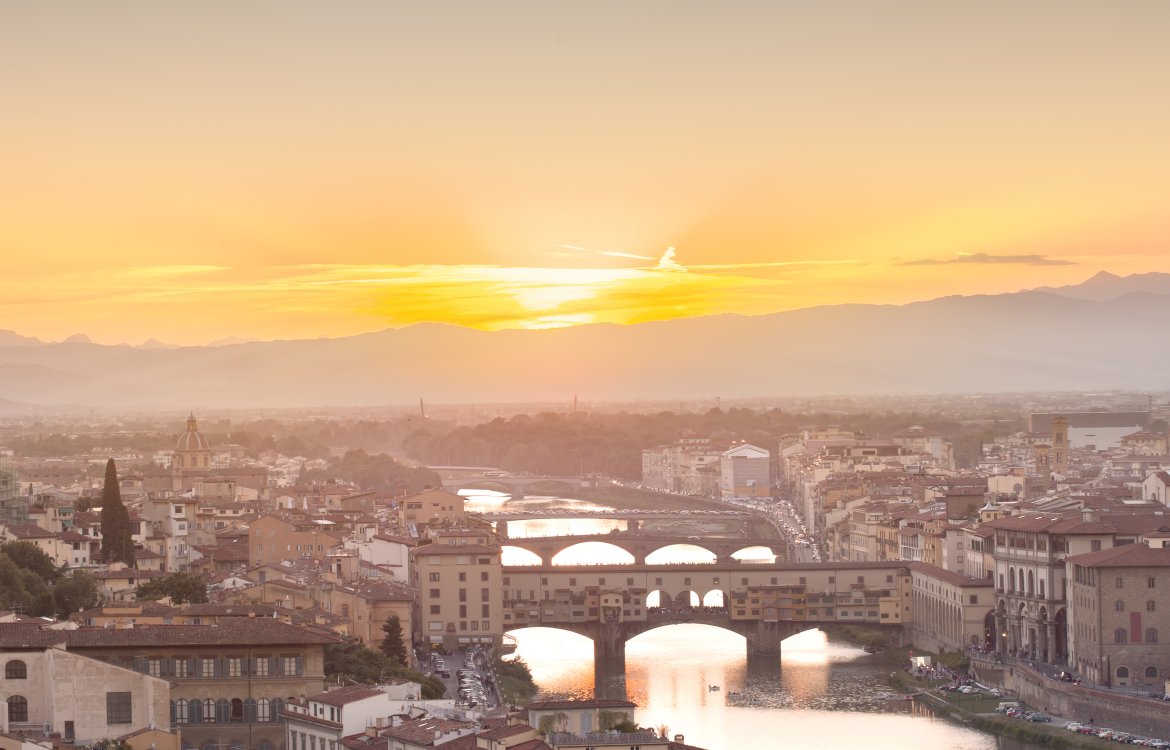 Discover Florence
Florence - Firenze - is many things; the heart of Tuscany, a Renaissance jewel, a true city of art. It's home to the Uffizi, one of the oldest museums in the world, and the Accademia, home to one of the most famous statues in the world - David. The incredible Cathedral - Duomo dominates the skyline, with Brunelleschi's fabulous dome - cupola, and Giotto's mighty clock-tower - campanile.
Background, must-sees and map of Florence, "Cradle of the Renaissance":
Explore Florence
-
-
RomeLate dealsRome, the 'Eternal City', explore the Colosseum, The Roman Forum, the jewels of Ancient Rome ...
-
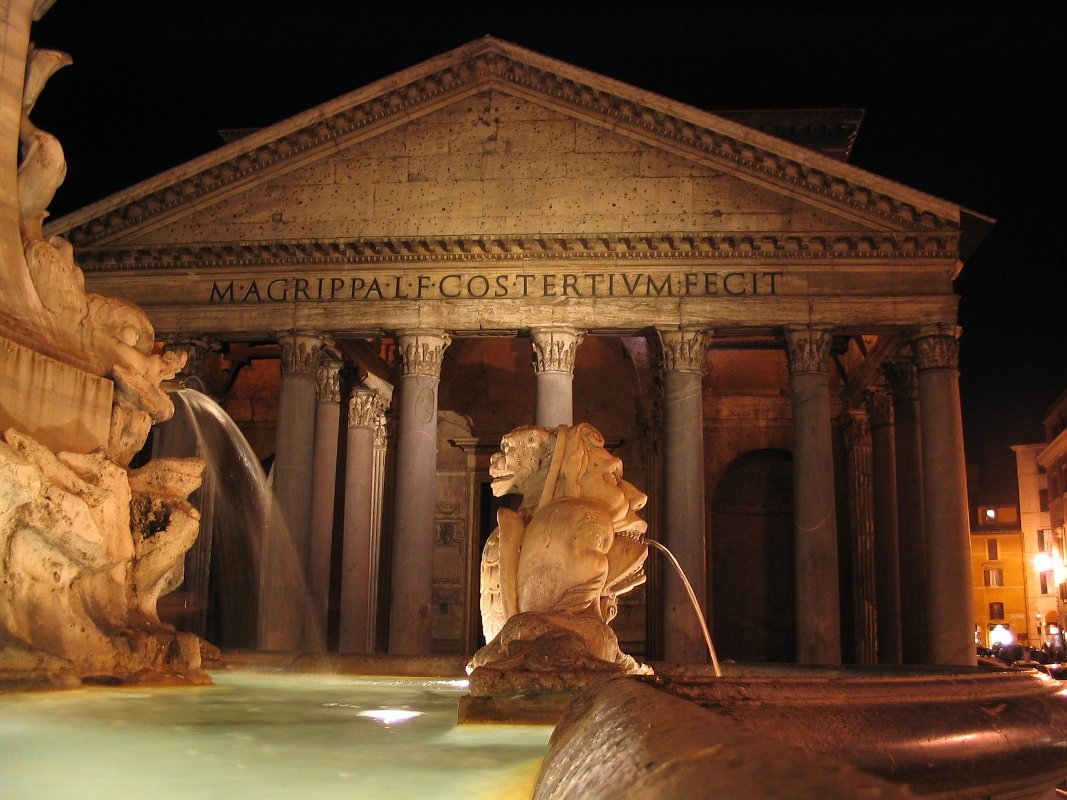 Discover Rome
Rome - Roma - is the Classical city of the Forum, the Pantheon and the Colosseum. It is pagan temples, early Christian Churches, Renaissance Basilicas, the Vatican of course. Rome is an architectural masterclass in the Classical, the Romanesque and all flavours of Gothic architecture, of the Baroque. And it is the romantic city of the Trevi Fountain and the Spanish Steps.
Background, must-sees and map of Rome, "The Eternal City":
Explore Rome
-
-
The VaticanSkip the linesThe Vatican and St Peter's, home of the Catholic Church and the treasures of the Vatican Museums ...
-
VeniceVenice, the floating city. Wonder at the Doge's Palace, St Mark's Square, and explore the canals by gondola ...
-
MilanLast Supper ExclusivesMilan, home of fashion, the fabulous Gothic Duomo, and, of course, Leonardo da Vinci's Last Supper ...
-
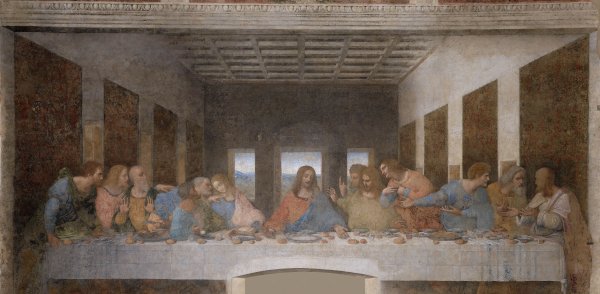 Da Vinci's Last SupperWe have specialised in Last Supper
tickets and tours for over 15 years.
Availability is always limited and
advanced booking is essential.
Check availability
-
-
PisaSkip the linesPisa, home to the must-see Leaning Tower of Pisa and the nearby annual Andrea Bocelli concert.
-
Tailor-made Private ToursCustom private tours and excursions on request
 See all ...
 Florence


 Rome
Rome


 The Vatican


 Venice


 Milan
Milan


 Pisa
Pisa


 Tailor-made Private Tours
- Best sellers:
- Tailor-made tours
- David, Florence
- Uffizi Gallery
- Vatican
- Last Supper
- Pisa Tower
The Clock Tower - Torre dell'Orologio - Venice, information and booking
Book tickets for Venice Clock Tower.
Ticket types, opening times, how to gain admission
The Torre dell'Orologio on St Mark's Square (Piazza San
Marco) is of huge importance, both practical, historical and symbolic
in the story of Venice. All the greater pity then that it was obscured
behind scaffolding for so long - undergoing a major renovation. Now
though, this extraordinarily elaborate timepiece is on public show
again, in full working order, and delighting visitors and Venetians
alike, as it has done for more than 500 years.
You can view a short video of the clocktower on our blog.
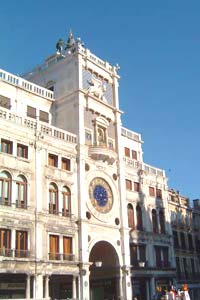
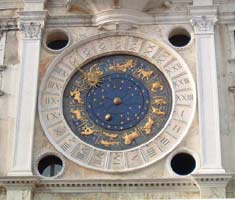
The clock (alternatively known as St Mark's Clocktower or the Moors' Clocktower) displays the time of day, the dominant sign of Zodiac and the current phase of the moon - it's an extraordinarily elaborate timepiece. St Mark's Square is the heart of Venice, seat of both political and religious power (right next door is the Procuratie Vecchie, the administrative buildings of the old Republic), the commercial centre and for centuries the place to meet in the city. The clock fulfilled a resolutely practical role in what was a mighty maritime empire in centuries past. Seafarers setting out from the Grand Canal could rely on this faultless timepiece to decide the most favourable time for setting out to sea. So reliable is the clock, that in 1858 it was made the official timekeeper of Venice - to which every other clock should be set.
 |
 |
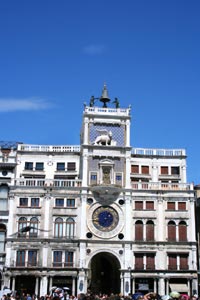 |
But such a timepiece, symbolic of Venice's power and control, had to be beautiful and impressive as well as accurate, and the clock and its tower are certainly that. In the early 1490s, the city's Senate decided that the world's greatest contemporary seapower required a better timekeeper than the old clock of Sant'Alipio, which occupied the north-western corner of the Basilica di San Marco. It was commissioned by Doge Agostino Barbarigo in 1493. The building, (perhaps designed by Mauro Coducci or Codussi), would house 'the most excellent clock' to be created by the father-and-son team of Giampaolo and Giancarlo Rainieri, engineers from Reggio Emilia. Upon its completion, on 1 February 1499, the two master mechanics became its custodians, the start of a five-century tradition whereby the keepers lived with their families inside the tower. This rather gives the lie to the legend that the Senate had the creators blinded on completing the clock, jealous that they would go on to repeat the marvel elsewhere. The tale, while lurid, in any case sits improbably with the tradition of medieval Venice as a haven of learning, enlightenment and relative liberalism.
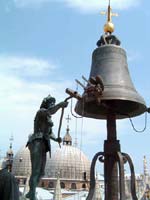
Houses were razed and in February 1499 a diarist notes that "The clock on the square was unveiled for the first time - above the street that leads into the Merceria [a market or place of commerce]. It is most beautiful and ingenious." The tower at this point stood alone, rising from an archway at ground level, surmounting a gateway into St Mark's Square. Above this the tower rises, through a series of rectangular storeys, incorporating the clockface itself and then to a terrace. Here, two bronze figures stand and, on the hour, ring a bell. This pair were originally intended as giants, but with the bronze swiftly blackening in the Venice air, they became known as 'the Moors', hence the tower's nickname.
 |
 |
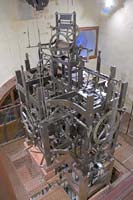 |
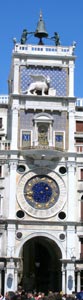
The clocktower wears its symbolism on its facade and patient and observant visitors can pick out much of the self-image of medieval Venice from here. There is a representation of the Lion of San Marco, symbolising the power and wisdom of the ruling fathers of the Republic. The Magi paying homage to Christ symbolise the Christian faith. And the wilfully complex machinery of the timepiece itself represents Venice's triumphs in the fields of mechanics and science. Here, on a facade of a few metres is a graphical representation of the three pillars of the Serene Republic's power - scientific progress, civic enlightenment and Christian faith.
Now we have the marvel of the clock mechanism itself. The main clock face consists of a number of concentric dials. The outermost displays numbers 1 to 24 in Roman numerals - a hand decorated with an image of the sun pointing to the hour. A second dial shows the 12 signs of the zodiac; these are illuminated in gilt gilt on an enamel blue background. The inner dials (also gilt on blue) show the phases of the moon and sun. The clock also moves a display above the face, where a niche with the Madonna and baby Jesus sits between two displays: here we see the hours in Roman numerals; the minutes are show in Hindu-Arabic numerals. At certain points during the day, Virgin and Child emerge to rotate and then hide away once again. During Ascension week and Epiphany, another treat is in store for visitors, as statues of the Three Wise Men emerge to pass in front of Mary and Jesus.
For a decade or so the clocktower stood alone, then four supporting bays were added (two to each side of the larger central tower). In 1755, architect Giorgio Massari brought the side wings over the terraces and added balustrades, while eight columns were added at ground level (probably by Andrea Camerata). Other than this, little has been done to augment the external appearance of the tower. Major internal work was done in the 19th century, with the old wooden stairs being replaced with metal spiral stairs. The lead roof was replaced with marble slabs and brick vaults and the 'moors' were hoisted around a metre higher. More crucially, perhaps, the clock had a long-overdue overhaul at the same time.
And that was it until the most recent renovation, due to be completed in the mid-nineties, but like so many Italian renovation projects running a few years' overdue. Now the scaffolding is off and the San Marco Clocktower can again be seen in its 15th century pomp. Most importantly, with a restoration of the clock mechanism by Swiss clock-makers Piaget, the 500-year-old timepiece is still going strong ... and still keeping perfect time.
Book tickets for Venice Clock Tower.
Ticket types, opening times, how to gain admission
Quick booking links:
Accademia tickets : Uffizi tickets : Uffizi guided tours : Colosseum tickets : Florence guided tours :
Vatican tickets : Vatican tours : Borghese tickets : Venice Museums : The Last Supper : Last Supper - tours : Verona Opera tickets : Pisa Tower tickets : Pompeii and Naples area tickets
Florence tickets : Rome tickets : Venice tickets : Milan tickets : Verona Opera
Why Tickitaly?
| Based in Italy for 15+ years. Local knowledge, local contacts. We're here to help. | |
| Transparency. All tickets are full-entrance with no extras to pay! | |
| Availability - we'll often get you in when availability elsewhere is exhausted. | |
| Trust - we've been working with suppliers and guides for ever! Over 10,000 reviews with an average of almost 5 out of 5! |
Payments
We use industry standard Stripe for all-secure payments.
You'll be charged nothing until we have confirmed your tickets and tours.
All prices are displayed in full - there are no additional charges 'on-site' and you will be arriving with the confidence of carrying fully-paid tickets.
Customers also liked
Tickitaly is a Licensed Italian Travel Agency
Registered at the Florence Chamber of Commerce
P.IVA 05144650487
Questions?
Payments
We use industry standard Stripe for all-secure payments.
You'll be charged nothing until we have confirmed your tickets and tours.
All prices are displayed in full - there are no additional charges 'on-site' and you will be arriving with the confidence of carrying fully-paid tickets.
© 2002-2024 tickitaly.com. Made in Italy