Cart is empty
more_horiz

-
 See all ...View our full range of attractions, activities and destinations ...
-
- Michelangelo's David
- Uffizi Gallery
- Florence Cathedral
- Palazzo Vecchio
- Pitti Palace
- Boboli Gardens
- Vasari Corridor
- Bargello
- Santa Croce
- Brancacci Chapel
- Medici Chapels
- Florence tours
- Walking tours
- Art tours
- Segway tours
- Bicycle tours
- Bus tours
- Cooking course
- Wine tasting
- Florence excursions
- Airport shuffle
- Train tickets
- Colosseum tickets
- Colosseum tours
- Colosseum dungeons
- Colosseum by night
- Vatican tickets
- Vatican tours
- Private Vatican tours
- St Peter's Basilica
- Borghese Gallery
- Domus Aurea
- Caracalla baths
- Castel sant'Angelo
- Palazzo Valentini
- Roman catacombs
- Rome tours
- Rome private tours
- Rome Segway
- Rome by bike
- Rome bus tours
- Train tickets
-
-
FlorenceNew OffersFlorence, 'Cradle of the Renaissance', home to Michelangelo's David, the Uffizi Gallery ...
-
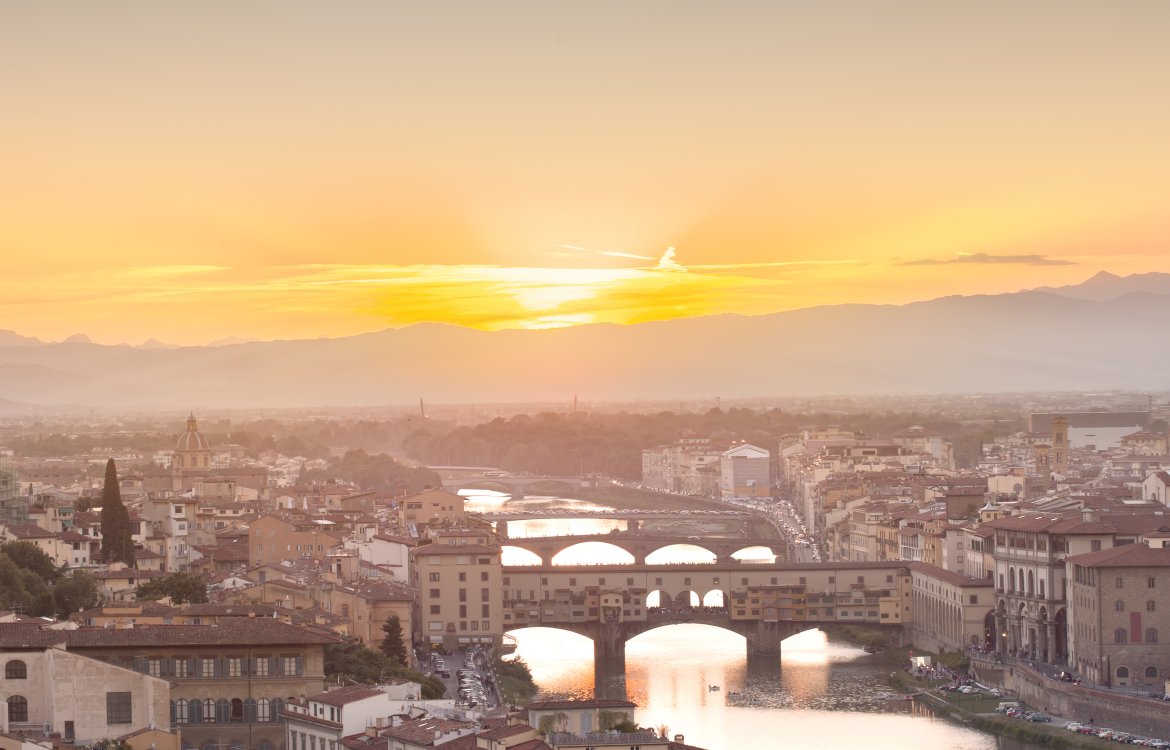 Discover Florence
Florence - Firenze - is many things; the heart of Tuscany, a Renaissance jewel, a true city of art. It's home to the Uffizi, one of the oldest museums in the world, and the Accademia, home to one of the most famous statues in the world - David. The incredible Cathedral - Duomo dominates the skyline, with Brunelleschi's fabulous dome - cupola, and Giotto's mighty clock-tower - campanile.
Background, must-sees and map of Florence, "Cradle of the Renaissance":
Explore Florence
-
-
RomeLate dealsRome, the 'Eternal City', explore the Colosseum, The Roman Forum, the jewels of Ancient Rome ...
-
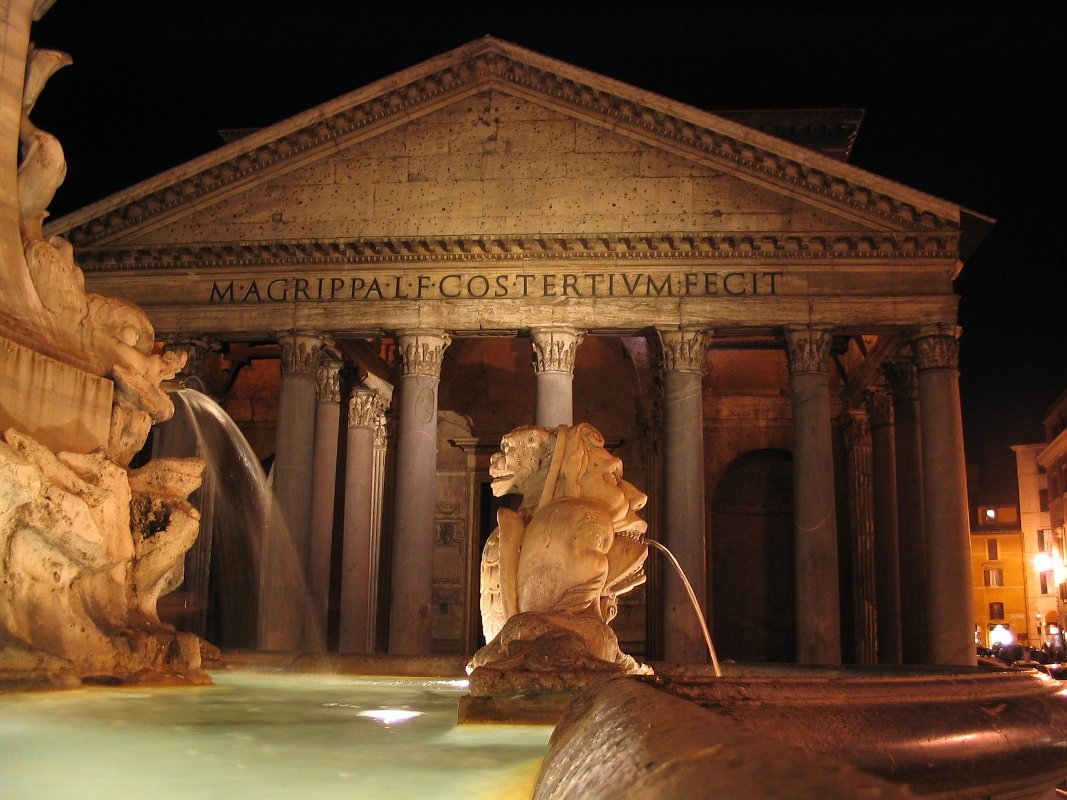 Discover Rome
Rome - Roma - is the Classical city of the Forum, the Pantheon and the Colosseum. It is pagan temples, early Christian Churches, Renaissance Basilicas, the Vatican of course. Rome is an architectural masterclass in the Classical, the Romanesque and all flavours of Gothic architecture, of the Baroque. And it is the romantic city of the Trevi Fountain and the Spanish Steps.
Background, must-sees and map of Rome, "The Eternal City":
Explore Rome
-
-
The VaticanSkip the linesThe Vatican and St Peter's, home of the Catholic Church and the treasures of the Vatican Museums ...
-
VeniceVenice, the floating city. Wonder at the Doge's Palace, St Mark's Square, and explore the canals by gondola ...
-
MilanLast Supper ExclusivesMilan, home of fashion, the fabulous Gothic Duomo, and, of course, Leonardo da Vinci's Last Supper ...
-
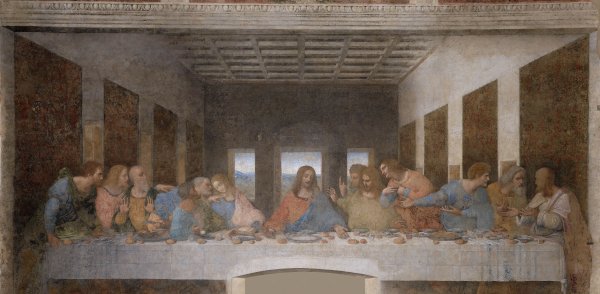 Da Vinci's Last SupperWe have specialised in Last Supper
tickets and tours for over 15 years.
Availability is always limited and
advanced booking is essential.
Check availability
-
-
PisaSkip the linesPisa, home to the must-see Leaning Tower of Pisa and the nearby annual Andrea Bocelli concert.
-
Tailor-made Private ToursCustom private tours and excursions on request
 See all ...
 Florence


 Rome
Rome


 The Vatican


 Venice


 Milan
Milan


 Pisa
Pisa


 Tailor-made Private Tours
- Best sellers:
- Tailor-made tours
- David, Florence
- Uffizi Gallery
- Vatican
- Last Supper
- Pisa Tower
The Domus Aurea - Nero's House, Rome - information & booking
Domus Aurea - Nero's House, Rome, Italy - visitor information
October 2014. Almost eight years later and the Domus Aurea is finally open to visitors again, albeit it in a restricted and limited fashion. We're offering limited spaces on fully guided tours on Saturdays and Sundays that will allow visitors once again to view some of this very hidden gem.
The Domus Aurea (or ‘golden house’) has one of the most historically exciting stories in Rome, starting with the decadent excesses of Nero and inspiring Renaissance artists such as Raphael to a new style of art (and giving us the word ‘grotesque’ in the process). But back to the beginnings.
Nero is famous for his self indulgence of course. We remember the Emperor as the man who fiddled while Rome burned. There were of course no fiddles in first century Rome, and historian Suetonius merely says that the Emperor watched the flames from a tower while singing a song about the razing of Troy. The story may be apocryphal, though it’s argued that Nero had the fires set himself, using the Christians as scapegoats, and thus setting in chain centuries of persecution.
Nero was licentious, cruel and, frankly, mad. He became emperor when his mother, Agrippina poisoned his step-father Claudius, and Nero in turn murdered his mother. His Domus Aurea was a step too far though. This collection of nymphaeums, banqueting rooms, bath houses, gardens and terraces was surrounded by a vast complex of fountains, drained from the surrounding hills. There was hot and cold running water in the baths; one of the rooms showered visitors in flower petals and perfumes as they entered, and the façade was coated in solid gold. The grounds covered a square mile and contained vineyards and game.
The Romans had enough, and Nero was forced to commit suicide in 68AD. Emperor Vespasian tore down large parts of the Domus Aurea, drained its huge lake, and began the construction of the Colosseum on the lake bed. Trajan built baths on the area and that, for a thousand years or so, was that.
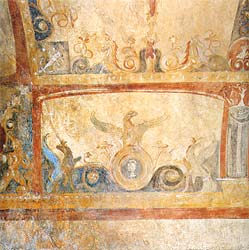
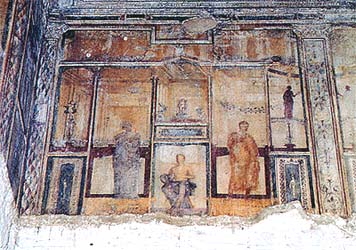
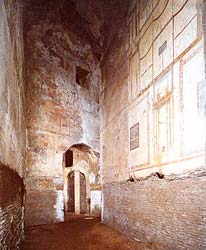
But the Renaissance saw a reawakening of interest in long-forgotten Classical Rome. Painters, including Raphael, began to explore the old sites. Climbing down ladders into what they believed were caves, or grottos, they found the rooms of the old palace, walls still adorned with paintings. Imitating these in their own work, they dubbed the style grotesque (from grotto). Soon, pagan designs were appearing in paintings and frescoes these Christian artists were carrying out for the pope in the Sistine Chapel and the Logge Vaticane. And so mad, pagan Emperor Nero inspired a new course in devotional Christian art.
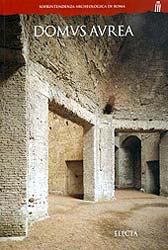
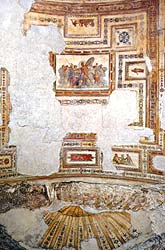
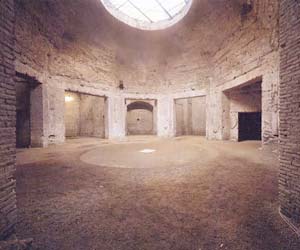
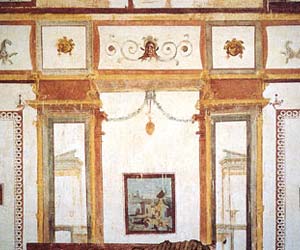
Tours today take in the Octagonal Room. The domed salon, with a hole at its centre, is supposed to have rotated with the passing of the day, following the movement of the sun. The building has fine frescoes, with much trompe l’oeuil work of Romans ‘looking at you’ through windows on the walls, and mythical beasts sporting among the vines, trees and fields. There is also a marvellous fresco depiction of Homer’s story of Achilles being sent to Skyros. The tour takes you around surviving terraces and fountains and into the atmospheric underground chambers of the Domus Aurea.
Please note: The controlled atmosphere inside means that the temperature is always around 10 decrees Celsius (50 degrees Fahrenheit), with 100% humidity - you're strongly advised to take a coat, jacket or pullover with you at any time of the year!
Why Tickitaly?
| Based in Italy for 15+ years. Local knowledge, local contacts. We're here to help. | |
| Transparency. All tickets are full-entrance with no extras to pay! | |
| Availability - we'll often get you in when availability elsewhere is exhausted. | |
| Trust - we've been working with suppliers and guides for ever! Over 10,000 reviews with an average of almost 5 out of 5! |
Payments
We use industry standard Stripe for all-secure payments.
You'll be charged nothing until we have confirmed your tickets and tours.
All prices are displayed in full - there are no additional charges 'on-site' and you will be arriving with the confidence of carrying fully-paid tickets.
Customers also liked
Tickitaly is a Licensed Italian Travel Agency
Registered at the Florence Chamber of Commerce
P.IVA 05144650487
Questions?
Payments
We use industry standard Stripe for all-secure payments.
You'll be charged nothing until we have confirmed your tickets and tours.
All prices are displayed in full - there are no additional charges 'on-site' and you will be arriving with the confidence of carrying fully-paid tickets.
© 2002-2024 tickitaly.com. Made in Italy